
What was studied?
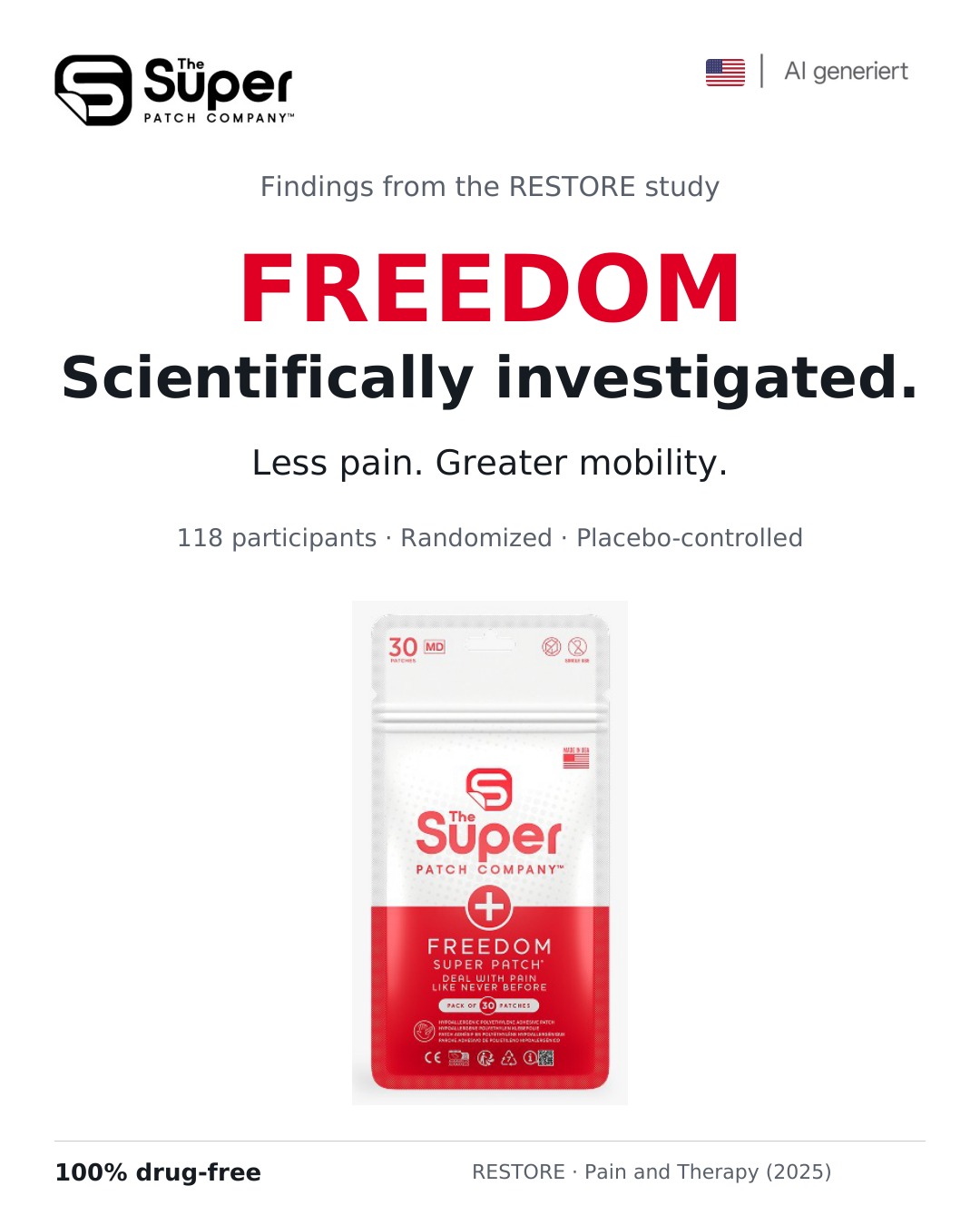
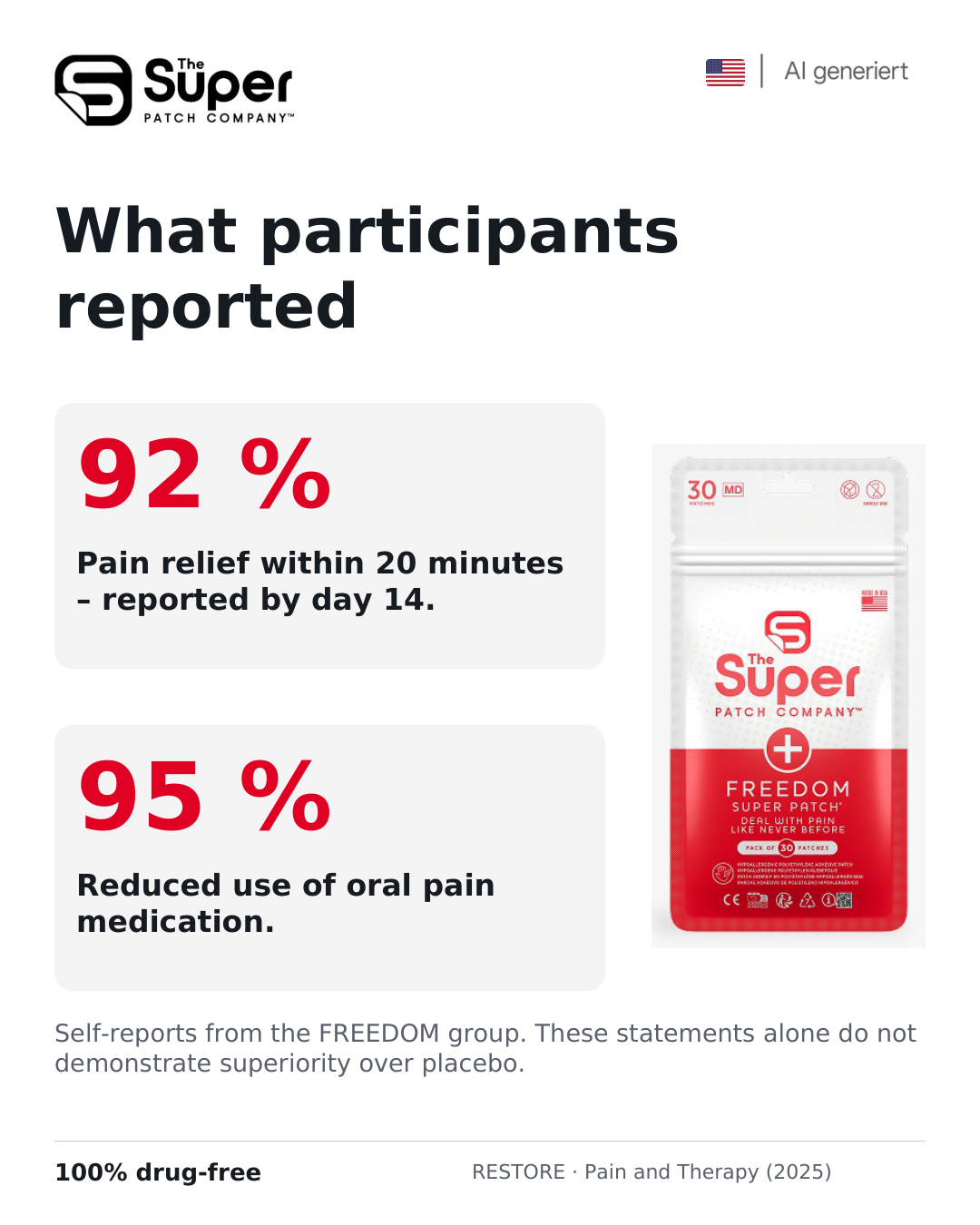
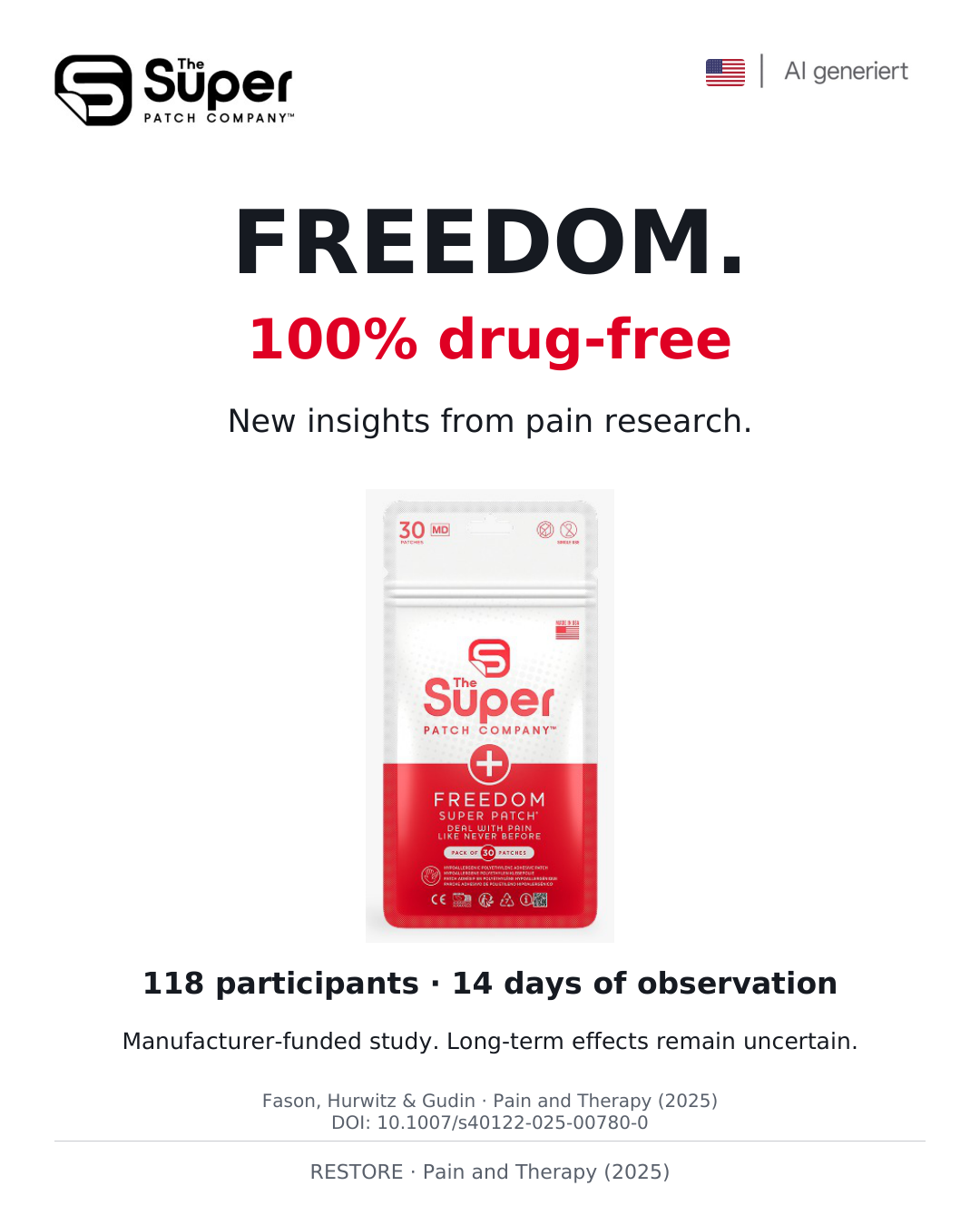
RESTORE was a randomized, double-blind, placebo-controlled study of the Freedom patch in 118 adults over 14 days: 64 used the active patch and 54 a placebo. It was published in Pain and Therapy on 8 October 2025.
What do the results show?
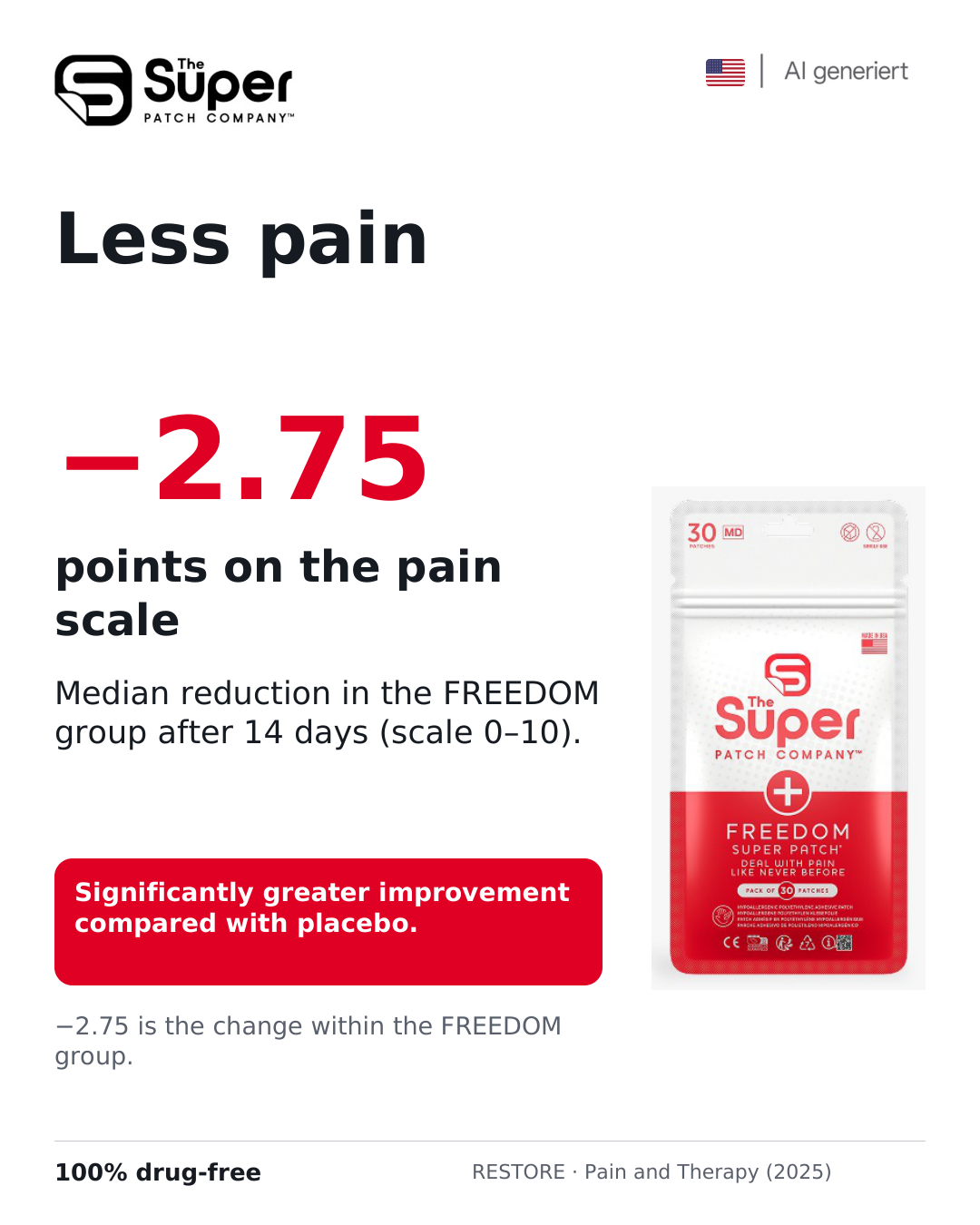
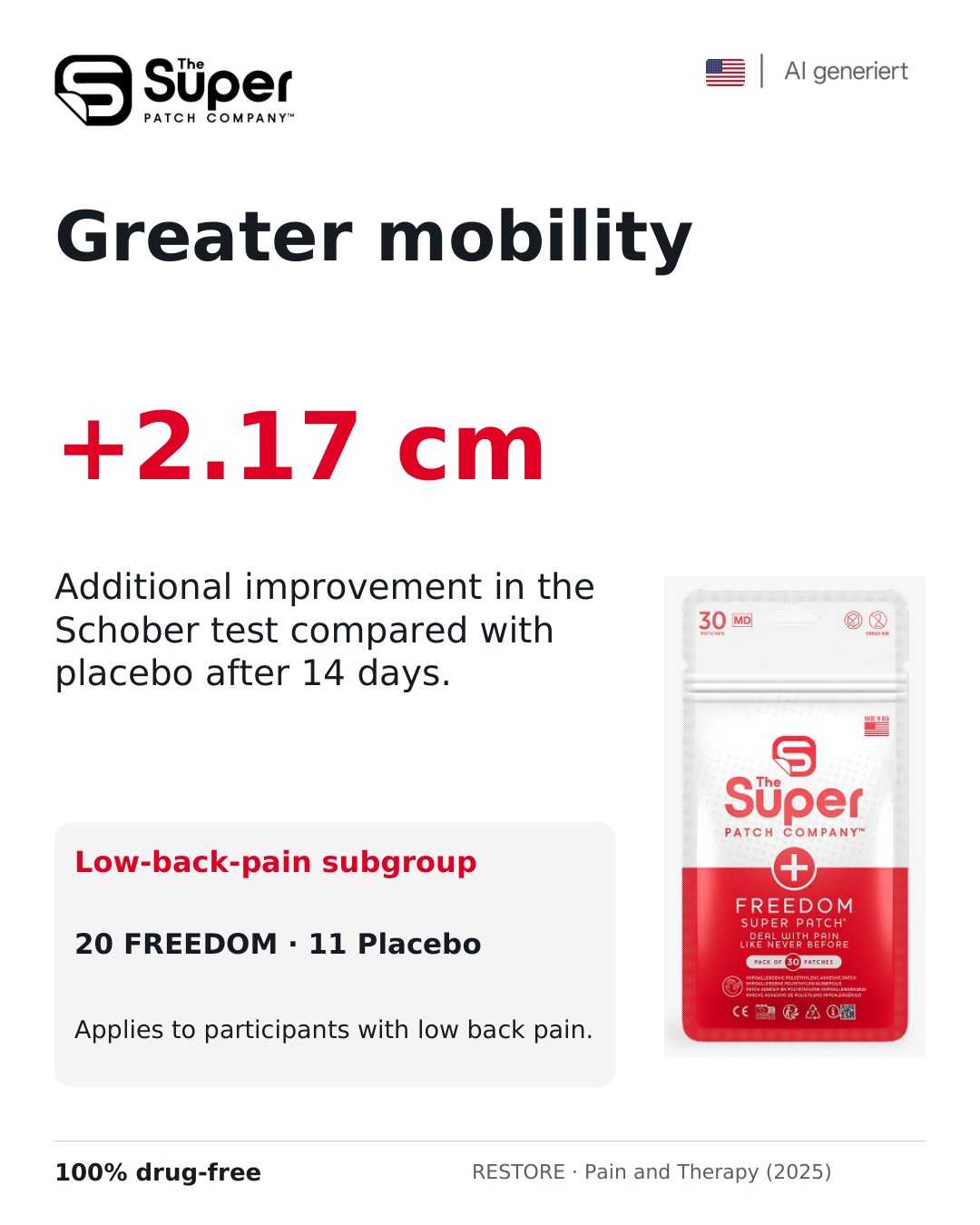
Pain scores improved more than with placebo. The frequently quoted decrease of 2.75 points is the median change within the Freedom group, not the difference from placebo. In a small subgroup with lower back pain, the Schober test showed an additional improvement of 2.17 cm versus placebo (20 active and 11 placebo participants).
Strengths and limitations
This short exploratory study leaves long-term effects unresolved. Results do not automatically apply to other patches. Srysty Holdings funded the study; the authors disclosed payment for investigation and administration. Larger independent confirmatory studies remain important.
Sources
Explore the relevant patches
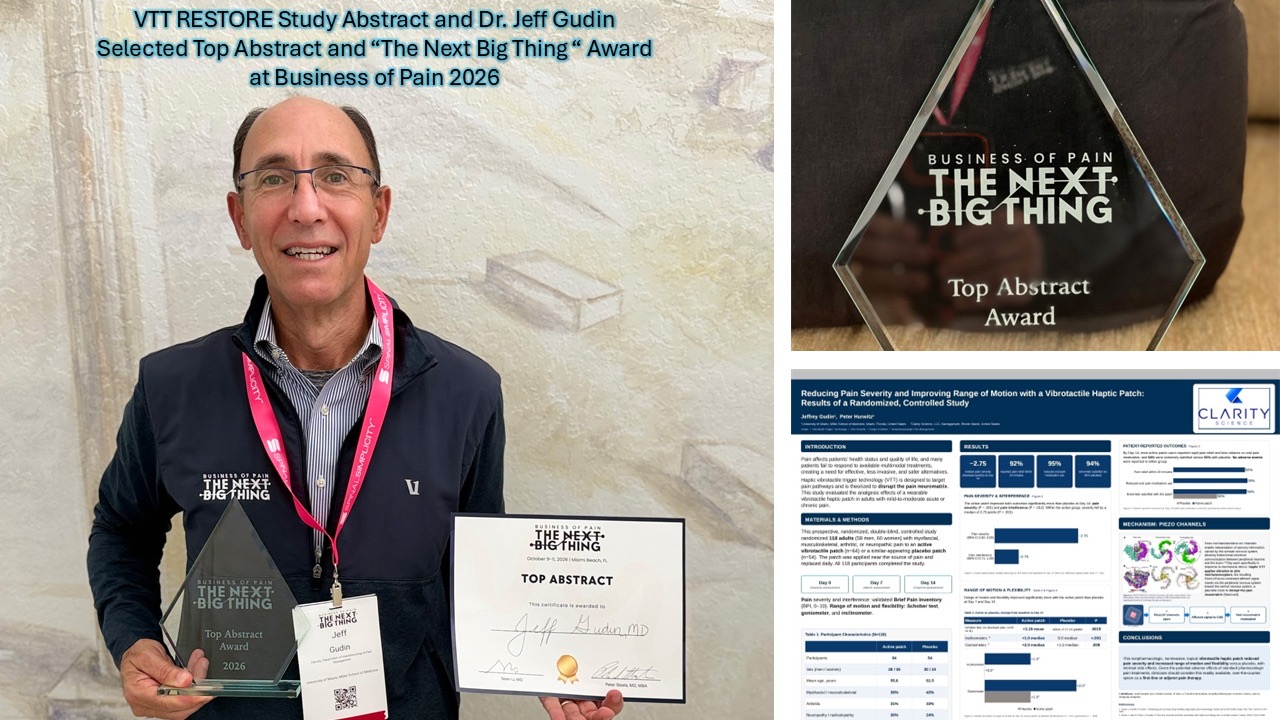
Dr Jeff Gudin: Top Abstract Award at Business of Pain 2026
The study in six slides

Earlier research: FREEDOM and HARMONI 2024
The HARMONI analysis by Gudin, Fason and Hurwitz, published on 5 February 2024, adds to FREEDOM's research history. Over 14 days, 148 adults used FREEDOM and 20 a sham patch. In the FREEDOM group, reported Brief Pain Inventory severity fell from 4.02 to 2.15 and interference from 2.59 to 1.29; in the control group from 3.66 to 3.45 and 1.61 to 1.56 respectively. These are group averages, not individual guarantees or placebo-adjusted percentages.
The publication reports positive changes but has a small control group and subjective assessments. Its design descriptions conflict: the abstract mentions randomisation, the methods describe an observational study, and the limitations explicitly call the trial nonrandomised. We therefore do not present it as an unambiguously randomised efficacy trial. Srysty Holding Co. funded it, Clarity Science administered it; Gudin and Fason were compensated and Hurwitz is its president. HARMONI 2024 and the newer RESTORE study are different investigations.
HARMONI 2024 · Original article